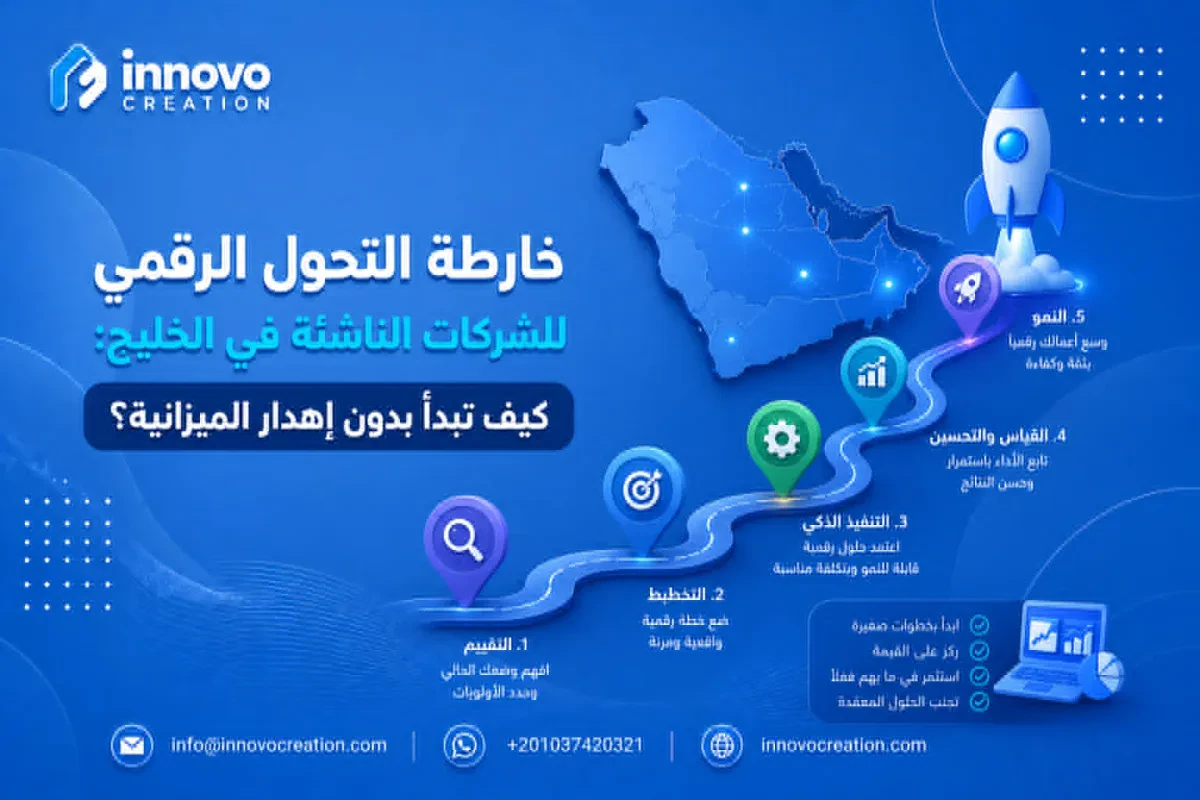
Digital transformation in the GCC is no longer limited to large enterprises. Startups and small teams now require structured systems for sales, operations, and customer service.
However, many companies fail by starting large-scale systems without clear priorities or measurable outcomes.
1. Understand the real customer journey
Before building any system, you must understand how your business currently operates:
- Where is time being wasted?
- Where do manual errors repeatedly occur?
- Where are invoices or orders delayed?
- Which processes depend heavily on manual work?
These are your real automation opportunities.
2. Focus on MVP (quick wins)
Instead of building a full system, start with a solution delivered in 8–12 weeks.
Examples:
- Customer portal for order tracking
- Real-time operations dashboard
- Sales and finance integration
- Internal workflow management system
The goal is impact, not complexity.
3. Choosing the right technology partner
A GCC technology partner must understand more than coding.
Key requirements:
- E-invoicing compliance (Saudi ZATCA)
- Arabic and English support
- Multi-branch scalability
- Local business operations understanding
Ignoring this leads to costly rebuilds later.
4. Measure success after launch
Success is not measured by features.
Instead focus on:
- User adoption rate
- Task completion speed
- Reduction in operational errors
- Customer satisfaction improvement
5. Avoid overbuilding early systems
Common startup mistakes:
- Building complex systems too early
- Skipping MVP validation
- Focusing on features instead of outcomes
Start small, validate fast, then scale.
6. Real-world example
A GCC startup struggling with manual order processing implemented a simple internal dashboard.
Results:
- 40% faster order handling
- Reduced human errors
- Improved team coordination
Simple systems often deliver the biggest impact.
7. Why MVP-first strategy works
MVP-first development helps companies:
- Reduce development cost
- Minimize risk
- Validate faster in the market
- Make data-driven decisions
Conclusion
Digital transformation is not a single project. It is a continuous journey of improvement, validation, and scaling.
Start small, prove value, then expand.