
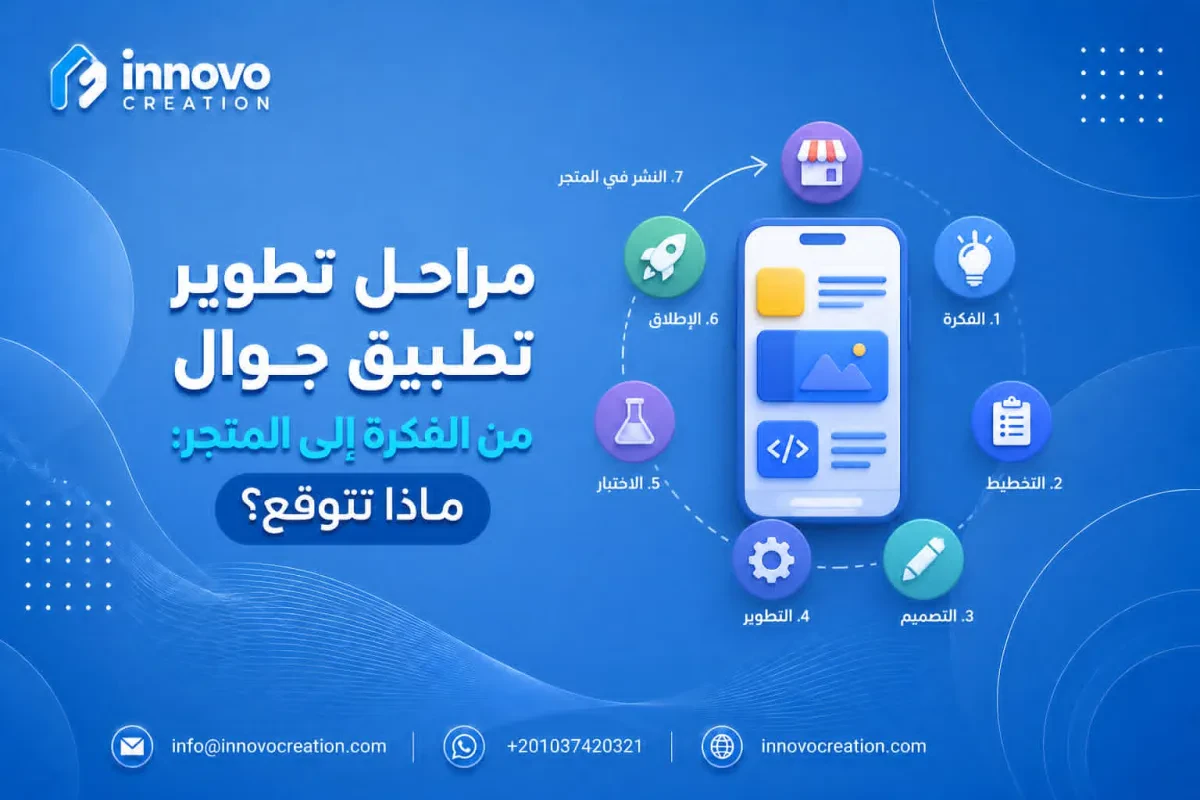
Developing a successful mobile application is not just about writing code or designing screens. It is a full journey that starts with understanding a real problem and ends with launching a scalable product in the market.
The difference between a simple idea and a successful app lies in how well each development stage is executed.
1. Idea and Market Research
Every successful application begins with a clear idea supported by real market needs. Before any development starts, you need to answer key questions:
What problem does the app solve?
Who is the target audience?
Are there existing solutions in the market?
What makes your idea different or better?
Is there real demand for this solution?
Without proper research, development becomes guesswork rather than a structured process.
Key focus areas
| Area | Purpose |
|---|---|
| Problem definition | Identify user pain points |
| Target audience | Understand user behavior |
| Competitor analysis | Identify market gaps |
| Value proposition | Define what makes your app unique |
A strong idea is not about creativity alone, but about solving a real and validated problem.
2. Planning and Strategy
Once the idea is validated, it must be transformed into a clear execution plan.
This stage defines the structure of the entire project.
Main planning activities include:
Defining core features
Building a Minimum Viable Product (MVP)
Mapping the user flow
Selecting target platforms (iOS, Android, or both)
Setting a development timeline
MVP structure example
| Version | Description |
|---|---|
| MVP | Core essential features only |
| Version 1 | Improved features and stability |
| Version 2 | Expansion and advanced features |
The goal of this stage is to reduce complexity and focus only on what truly matters in the first release.
3. UI/UX Design (User Experience and Interface)
Design is not just about appearance. It is about usability and user behavior.
A good design makes the app easy to use, while a bad design leads to user drop-off.
What happens in this stage:
Designing app screens
Creating user navigation flow
Simplifying user interactions
Improving overall usability
Important principle
The fewer steps a user needs to complete an action, the better the user experience.
Impact of poor design
| Issue | Result |
|---|---|
| Complex interface | Users leave the app |
| Too many steps | Low conversion rate |
| Confusing navigation | Poor engagement |
UI/UX directly affects user retention and product success.
4. Development Phase
This is where the actual product is built and brought to life.
Development usually includes multiple layers:
Frontend development (what users see)
Backend development (server logic and database)
API integration
Authentication systems
Data management
Technical breakdown
| Component | Function |
|---|---|
| Frontend | User interface |
| Backend | Business logic |
| Database | Data storage |
| APIs | System communication |
At this stage, the design is transformed into a working product.
5. Testing and Quality Assurance
Before launching the application, it must be tested thoroughly to ensure stability and performance.
Testing helps prevent critical issues after release.
What is tested:
Application performance
Bug detection
Device compatibility
User experience validation
System stability under load
Types of testing
| Type | Purpose |
|---|---|
| Functional testing | Ensure features work correctly |
| UI testing | Check visual consistency |
| Performance testing | Measure speed and stability |
| Security testing | Protect user data |
Even small bugs can significantly affect user ratings and trust.
6. App Store Launch
After successful testing, the application is prepared for release on official platforms:
Google Play Store
Apple App Store
Launch preparation includes:
Writing app descriptions
Preparing screenshots and visuals
App Store Optimization (ASO)
Final build submission
Compliance with store guidelines
Each platform has its own approval process, especially Apple, which is stricter and may require additional review time.
7. Post-Launch and Growth
Launching the app is not the end of the journey. It is the beginning of real user interaction.
After launch, you should monitor:
User behavior
App performance
Crash reports
User feedback and ratings
Continuous improvement cycle
| Activity | Purpose |
|---|---|
| Data analysis | Understand user behavior |
| Updates | Improve functionality |
| Feature expansion | Increase engagement |
| Bug fixes | Maintain stability |
Successful apps are those that evolve continuously based on user needs.
Comparison: Successful App vs Failed App
| Factor | Successful App | Failed App |
|---|---|---|
| Planning | Clear and structured | Random or missing |
| Design | Simple and user-friendly | Complex and confusing |
| Development | Organized and scalable | Rushed and unstable |
| Testing | Thorough | Minimal or ignored |
| Updates | Continuous | Rare or none |
Overall Development Flow
Idea → Market Research → Planning → UI/UX Design → Development → Testing → Launch → Growth
Conclusion
Mobile app development is a structured process that requires careful planning at every stage. Skipping or rushing any phase directly affects the final product quality.
A successful application is not built overnight. It is the result of continuous planning, execution, testing, and improvement.
Final Note
If you are planning to build a mobile application, working with a technical team that understands this full lifecycle can save significant time, cost, and effort while ensuring a strong and scalable product from day one.
Innovo Creation
We help you turn your idea into a fully developed mobile application ready for launch, starting from:
Idea analysis
UI/UX design
Development
Testing
App store deployment
Delivered in a professional way that ensures a scalable and competitive product.