As businesses grow, managing customers, tracking deals, and organizing sales processes becomes increasingly difficult.
At the beginning, simple tools like spreadsheets may be enough. But over time, things start to break down.
That’s where a CRM system becomes essential.
1. What is a CRM?
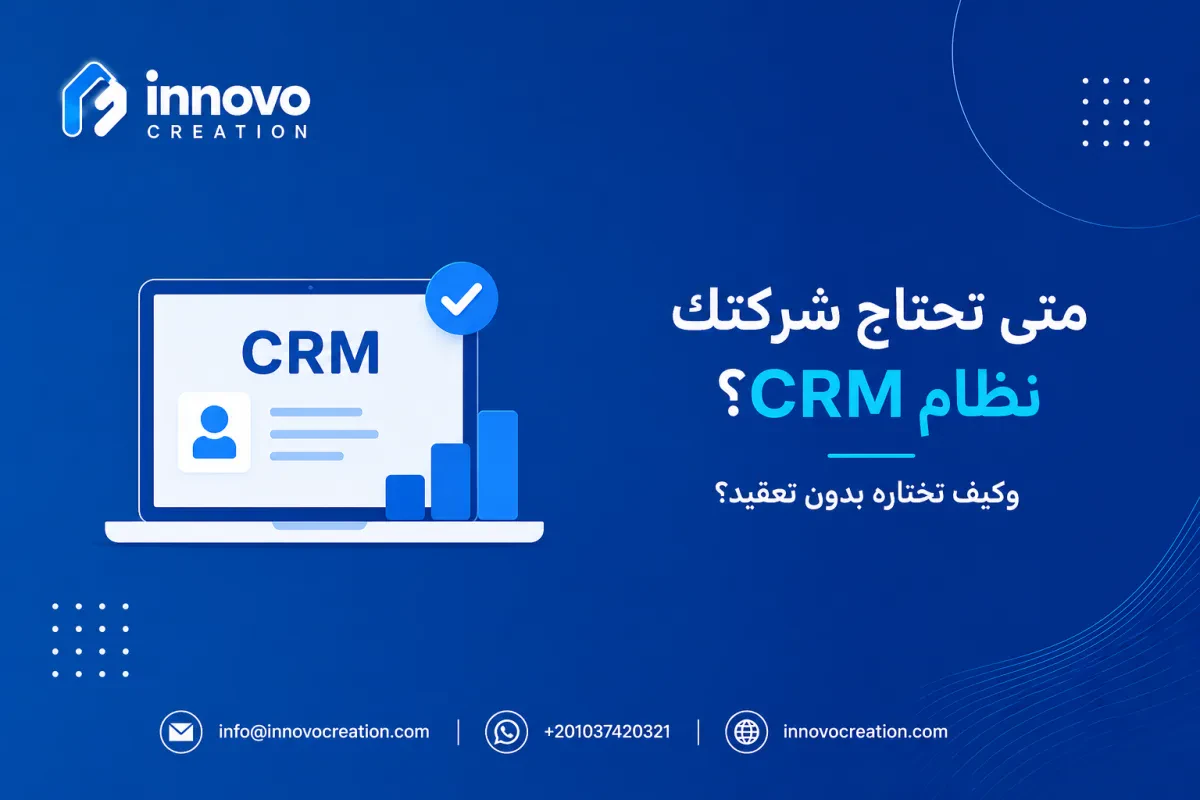
A CRM (Customer Relationship Management system) helps you:
- Manage customer data
- Track sales opportunities
- Organize communication
- Monitor your sales pipeline
In simple terms, it centralizes everything related to your customers in one place.
2. When do you actually need a CRM?
You don’t need a CRM from day one — but you do need it when:
- Your number of customers starts increasing
- Sales opportunities are getting lost
- Multiple team members handle the same clients
- You lack visibility into your sales process
If things start feeling “disorganized,” it’s time for a CRM.
3. Types of CRM systems
There are two main options:
1. Ready-made CRM (SaaS)
Examples:
- HubSpot
- Zoho
- Salesforce
Best for:
- Quick setup
- Small to medium teams
- Simple workflows
2. Custom CRM
Built specifically for your business
Best for:
- Complex sales processes
- Integration with other systems
- Custom roles and permissions
- Advanced reporting needs
4. A common mistake
One of the biggest mistakes is choosing an overly complex CRM too early.
This often leads to:
- Low team adoption
- Unnecessary complexity
- High costs without real value
5. How to choose the right CRM
Before deciding, ask:
- Will this actually help my sales team?
- Can it adapt to my workflow?
- Can it scale with my business?
- Is it simple enough to use daily?
The goal is not the biggest system — it’s the right system.
6. The smart approach
Start simple and scale gradually:
- Begin with customer tracking
- Add sales pipeline management
- Then reporting
- Then automation
Conclusion
A CRM is not just a tool — it’s a strategic decision that directly impacts your business growth.
Choosing the right system at the right time can significantly improve your sales efficiency.
If your business is growing and you need a CRM tailored to how you actually work, choosing the right development team can save time, cost, and prevent unnecessary rebuilds later.